
Last Edited: 29/07/2026
A rangehood is one of those kitchen appliances that rarely gets the attention it deserves, until you are standing over a hot pan watching smoke drift across your ceiling. The truth is, a quality rangehood does far more than remove cooking odours. It protects your cabinetry from grease damage, improves air quality, reduces moisture that can lead to mould, and makes your kitchen a more comfortable place to cook in every day.
At Bi-Rite we stock rangehoods from some of Australia's most trusted brands, including Schweigen, Westinghouse, Electrolux, Euromaid and Omega Appliances. Whatever your budget or kitchen style, there is a quality option to suit.
Here is what actually matters when you are choosing one.
1. Efficient Extraction Power
Extraction power is the single most important specification on any rangehood, and it is measured in cubic metres per hour (m³/h) or CFM (cubic feet per minute). Put simply, it tells you how much air the rangehood can move in a given time. The higher the rating, the faster it can clear smoke, steam and cooking odours from your kitchen.
As a general rule, your rangehood should be able to cycle the air in your kitchen at least ten times per hour. For a standard kitchen, look for a minimum extraction rate of 600 to 700 m³/h. If you cook frequently, use high heat methods like stir-frying or grilling, or have an open-plan living and kitchen area, you will want something closer to 900 m³/h or above.
Size matters here too. A 60cm rangehood suits a two or four-burner cooktop in a smaller kitchen, while a 90cm rangehood is better matched to a wider cooktop or a kitchen where serious cooking happens regularly. As a rule, your rangehood should be at least as wide as your cooktop, and ideally a little wider, to capture everything rising from the cooking surface.
When it comes to brands, Schweigen rangehoods have built a strong reputation in Australia for extraction performance. Their motors are powerful, run quietly and are built to handle the demands of a busy kitchen. Westinghouse rangehoods and Electrolux rangehoods both offer reliable, well-built extraction at a more accessible price point, which makes them popular choices for everyday Australian households.
For those working with a tighter budget, Euromaid rangehoods deliver solid, dependable performance at an entry level price. They are a practical, no-fuss option for rental properties, first homes and smaller kitchens.
2. Noise Levels
There is nothing worse than a rangehood so loud you cannot hold a conversation while cooking. Noise is one of the most commonly overlooked specifications when shopping for rangehoods, and one of the most complained about once the appliance is installed.
Rangehood noise is measured in decibels (dB). A quiet model will operate at around 45 to 55 dB on its lowest setting, which is roughly the volume of a normal conversation. At full power, most rangehoods rise to between 60 and 70 dB, which is closer to background music or a busy café.
If noise is a priority for you, look for rangehoods that feature brushless DC motors or remote motor technology. Schweigen rangehoods are particularly well regarded here. Some of their models are designed so the motor sits in the roof cavity or outside the home entirely, which removes almost all of the noise from the kitchen.
For open-plan living spaces where the kitchen flows into a lounge or dining area, getting the noise level right makes a genuine difference to how enjoyable the space is to spend time in.
3. Design and Aesthetics
Rangehoods are no longer purely functional appliances tucked away above the stove. In modern kitchen design, they are a statement piece, and the type you choose will have a real impact on how your kitchen looks and feels.
There are four main styles available at Bi-Rite.
Canopy Rangehoods are the most visually prominent style. They sit above the cooktop and feature a wide, sloped or angled canopy that draws the eye upward, creating a focal point in the kitchen. A 90cm canopy rangehood above a wide cooktop has become one of the most popular design choices in Australian kitchen renovations. They work best in kitchens with higher ceilings and suit both contemporary and classic styles.

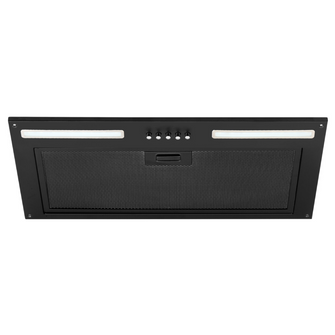
Undermount Rangehoods are installed beneath a kitchen cabinet, sitting flush with the cabinetry above. They are a discreet, space-saving option that suits smaller kitchens, or any kitchen where a clean, seamless look is the priority. You will often find them in apartments and open-plan spaces where keeping visual clutter to a minimum matters.

Slideout Rangehoods sit inside a cabinet above the cooktop and slide out when you need them, then tuck neatly away when you are done. They are compact, tidy and well suited to kitchens where bench space and ceiling height are limited. A slideout rangehood is often the most practical choice for rental properties and smaller households that want a built-in look without the cost of a canopy model.

Fixed Rangehoods are permanently positioned above the cooktop without a sliding mechanism. They are usually straightforward to install, easy to operate and a reliable choice where simplicity and value are the priority. A fixed rangehood is a solid everyday option that does the job without any fuss.

When choosing between styles, think about your cooktop width, ceiling height, cabinetry layout and how prominent you want the rangehood to be. There is no universally right answer. It really does depend on your kitchen and how you use it.
4. Ease of Maintenance
A rangehood you cannot keep clean is a rangehood that stops working properly. Grease and debris build up in the filters over time, which reduces extraction efficiency and, in the worst cases, creates a fire hazard. Ease of maintenance should be a genuine factor in your decision, not an afterthought.
Filter types vary between models. The two most common are stainless steel mesh and charcoal.
Stainless steel mesh filters are the most durable and low maintenance option. They can be removed and cleaned in the dishwasher, which keeps upkeep simple. Most quality rangehoods from brands like Schweigen and Westinghouse use stainless steel filters for exactly this reason.
Charcoal or carbon filters are used in recirculating rangehoods that do not vent outside. They absorb odours rather than expelling them. These filters cannot be washed and need replacing every three to six months, which adds to the ongoing cost of ownership.
Beyond filters, look for a rangehood with a smooth interior that is easy to wipe down. Exposed screws, rivets or complex internal shapes trap grease and make cleaning harder. Stainless steel finishes are the most practical choice for longevity and hygiene. They resist staining, are easy to clean and hold up well in the heat and moisture of a busy kitchen.
5. Smart Features and Energy Efficiency
Modern rangehoods have come a long way from a simple on and off switch. Today's top models offer a range of smart features that make them more convenient to use and more efficient to run.
Touch controls have largely replaced traditional push button panels on mid-range and premium models, giving a cleaner look and making them easier to clean. Some models also feature gesture control, where waving your hand near the rangehood activates it without needing to touch anything. That is genuinely handy when your hands are covered in flour or oil and you would rather not smear the control panel.
Auto-sensing technology is another useful feature. These models detect heat, steam and cooking activity and adjust the extraction speed automatically. Rather than manually cycling through speed settings, the rangehood does the thinking for you, running quietly during gentle cooking and ramping up when things get smoky.
Worth calling out specifically for anyone considering an induction cooktop is Hob2Hood technology, available on selected Westinghouse and Electrolux rangehood models. Hob2Hood creates a wireless connection between your rangehood and a compatible induction cooktop, so the two appliances communicate with each other automatically.
When you increase the heat on the cooktop, the rangehood senses the change and increases its extraction speed to match. When you turn the cooktop off, the rangehood keeps running for a short while to clear any remaining steam or odours, then switches itself off. It sounds like a small convenience, but it is the kind of thing you really miss once you no longer have it. If you are planning a kitchen renovation that includes an induction cooktop, it is well worth checking compatibility with a Westinghouse or Electrolux rangehood before you buy either appliance separately.
Timer functions are another small but useful touch. They let the rangehood keep running for a set period after you finish cooking, usually five to fifteen minutes, to clear any lingering odours before switching off on its own. It makes a noticeable difference to how fresh your kitchen smells after a big cook.
Finally, when it comes to energy efficiency, look for models with brushless DC motors. They use significantly less electricity than traditional AC motors while delivering equal or better performance. Given that a rangehood in an active kitchen can run for several hours a day, the savings add up over time.
|
Feature |
Westinghouse WRC924DSD |
Schweigen NAUM6B |
Omega Appliance ORT6WXA |
|
Type |
90cm Canopy |
60cm Undermount |
60cm Slideout |
|
Width |
900mm |
600mm |
600mm |
|
Extraction Rate |
810m³/h |
1080m³/h |
440m³/h |
|
Fan Speeds |
4 |
3 |
3 |
|
Noise Level |
56 to 73dB |
57 to 67dB |
47 to 68dB |
|
Filter Type |
Aluminium mesh, dishwasher safe |
Aluminium mesh, dishwasher safe |
Aluminium mesh, dishwasher safe |
|
Ducted or Recirculating |
Both |
Ducted |
Both |
|
Lighting |
LED |
LED |
LED |
|
Controls |
Touch Control |
Push Button |
Slider Switch |
|
Hob2Hood Compatible |
Yes |
No |
No |
|
Finish |
Dark Stainless Steel |
Black |
Stainless Steel |
|
Price |
$999 |
$529 |
$229 |
Conclusion
Choosing the right rangehood comes down to five things: extraction power matched to your cooktop and kitchen size, noise levels that suit your lifestyle, a design style that complements your kitchen, easy maintenance that keeps the appliance performing well over time, and smart features that make everyday use more convenient.
For most Australian households, a 60cm rangehood suits a compact kitchen with a standard cooktop, while a 90cm rangehood is the better choice for a wider cooktop or a kitchen where cooking happens seriously and often. If noise is a concern, a Schweigen rangehood is worth the investment. If you want reliable performance at a practical price, Westinghouse and Electrolux rangehoods are both strong, well-supported options.
Not sure which rangehood is right for your kitchen? Pop into your nearest Bi-Rite store and have a chat with one of our appliance specialists. We stock canopy rangehoods, undermount rangehoods, slideout rangehoods and fixed rangehoods from Schweigen, Westinghouse, Electrolux and Euromaid, and we can help you find the right fit for your space, your cooktop and your budget.
If you are pairing a new rangehood with an induction cooktop, ask us about Hob2Hood compatible models from Westinghouse and Electrolux for a smoother, more seamless cooking experience.
Shop the full Rangehood range